New York is home to one of the most vibrant wellness economies in the world. From boutique nutrition brands in Brooklyn to high-end wellness retreats in the Hudson Valley, the competition for local visibility is real. If you’re running a wellness business in New York—whether you’re a spa owner, therapist, supplement brand founder, or operate a health-focused retail space—then mastering local SEO is no longer optional. It’s essential.
In today’s digital-first world, your future clients are searching online before making any decision. They’re asking questions like “Where can I get lymphatic drainage in SoHo?” or “Best natural supplements store in Manhattan.” If your brand isn’t showing up in those search results, you’re missing valuable business and losing out to competitors who are more digitally visible.
This guide was created for you—the wellness entrepreneur who’s ready to expand your reach, connect with your ideal clients, and grow your business with purpose. Let’s dive into how local SEO can help your brand rise above the noise and shine.
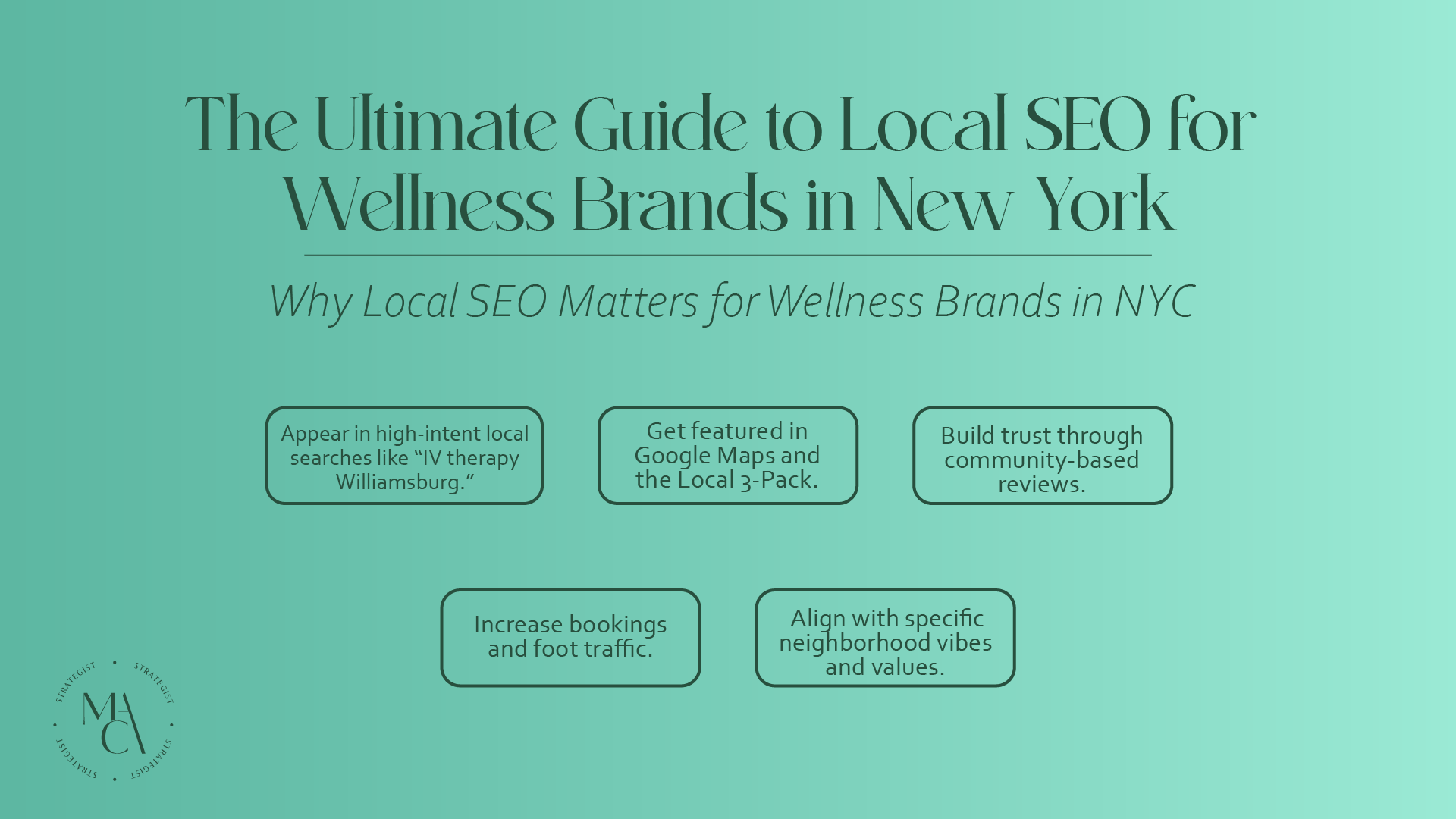
Why Local SEO Matters for Wellness Brands in New York
At Maca Strategist, we work with wellness brands across New York every day—and if there’s one thing we know for sure, it’s this: your potential clients are searching for you locally. Whether you’re a holistic health center in the Hudson Valley, a luxury spa in Manhattan, or a mental health practice in Brooklyn, your success depends on being visible in the exact moments people need you most.
Local SEO is what makes that happen.
Unlike broader SEO strategies that aim to get you seen on a national or global scale, local SEO helps your brand show up in specific neighborhoods, cities, or regions. It ensures that when someone types something like “best IV therapy SoHo” or “acupuncturist near Williamsburg” into Google, your business appears—ideally right there in the top three map listings.
And trust us, that’s where you want to be.
Wellness clients are inherently location-sensitive. They’re looking for services close to home, their office, or even a space that just feels aligned with their energy. In a city as layered and diverse as New York, that alignment really matters. A nutritionist in Park Slope might attract eco-conscious parents, while a breathwork facilitator in the East Village might serve creatives looking for emotional release. Understanding this nuance is part of what makes local SEO so powerful—and so essential.
Here’s why local SEO matters so much for wellness brands:
- You increase bookings and foot traffic. If people can’t find you online, they can’t book with you. Local SEO helps you show up where clients are actively looking—so they’re more likely to take the next step.
- You appear in Google Maps and local packs. These are the small but mighty listings you see at the top of local searches, often with reviews, directions, and business hours. Getting into this “local 3-pack” dramatically improves your visibility.
- You build trust through reviews. When people see five-star feedback from others in their community, they’re more likely to feel confident reaching out. Local SEO and review strategy go hand in hand.
- You boost brand awareness in your neighborhood. Even if someone doesn’t book right away, seeing your brand show up consistently in local results helps build familiarity—which often leads to bookings later on.
- You stay competitive in a saturated market. New York’s wellness scene is vibrant—but also crowded. Local SEO helps you stand out and carve out a distinct presence in your area.
And here’s something we love sharing with clients: local SEO isn’t just for service providers. If you’re a wellness retailer, an e-commerce brand with local pickup options, or even a wellness technology company offering location-based services, you can (and should!) be using local SEO to your advantage.
For example, let’s say you sell organic supplements online, but you also offer free same-day delivery in Manhattan. That’s a local value proposition worth optimizing for. Or maybe you’ve created an app that connects users with mental health professionals based on their location. Local SEO can help that app get discovered by users who need it most.
Ultimately, local SEO is about meeting your audience where they are—literally and emotionally. It’s about showing up in a relevant, trustworthy, and approachable way in a city that never stops searching. And when done well, it turns casual searchers into loyal clients who feel truly seen and supported by your brand.
As a digital agency for wellness brands in NY, this is the work we live and breathe. We understand the real stories behind the searches—and we’re here to help your brand rise to the top, one local connection at a time.
How to Set Up Your Google Business Profile the Right Way
One of the most important (and often overlooked) tools in your local SEO toolkit is your Google Business Profile (GBP). Whether you’re a licensed massage therapist in Brooklyn or running a wellness product showroom in SoHo, this listing is usually the first thing people see when they search for you—or for businesses like yours.
And here’s the truth: your Google Business Profile can either build instant trust… or cause someone to keep scrolling.
As a wellness brand, your space matters. Your tone matters. Your presence matters. So this digital storefront needs to reflect not just where you are, but who you are.
Why GBP is a Non-Negotiable for Wellness Brands
- It’s how Google knows where you’re located and what services you offer.
- It boosts your chances of showing up in the “local pack”—those top three listings with maps and reviews.
- It gives potential clients everything they need to make a decision quickly: location, hours, photos, booking links, and real reviews.
- It builds local authority, especially when paired with ongoing engagement and up-to-date content.
Here’s how to set up (or refine) your profile with care and strategy:
- Use your real business name.
No keyword stuffing (e.g., don’t call yourself “Best Massage Brooklyn | Reiki | Wellness Center”). Just use your real, official name. Clean, honest, and professional. - Choose the right categories.
Your primary category should clearly reflect your core offering—like “Wellness Center,” “Nutritionist,” “Acupuncturist,” or “Mental Health Service.” You can also add secondary categories (like “Massage Therapist” or “Herbalist”) that support your services. - Add accurate hours and service areas.
People want to know when you’re open—and they don’t want surprises. Update holiday hours, closures, and changes regularly. If you offer mobile or virtual services, add those areas too. - Upload real, high-quality photos.
Show your space. Show your products. Show your team. People want to feel the energy of your brand before they visit. Photos of tranquil waiting rooms, clean treatment areas, and smiling practitioners go a long way. - Include keywords naturally in your description.
Describe what you do in a clear, warm, and engaging way. If you’re a holistic health coach in Manhattan specializing in digestive wellness, say that! Just keep it authentic and human. - Add booking links and FAQs.
If you use platforms like JaneApp, Mindbody, or Squarespace Scheduling, add that direct link. Consider also using the FAQ feature to address common concerns (e.g., “Do you accept insurance?” or “What should I wear to a lymphatic drainage session?”). - Post regularly.
Use your GBP like a mini social feed. Announce special offers, seasonal services, upcoming events, or wellness blog highlights. Google likes fresh activity—and so do clients. - Ask for (and respond to) reviews.
This is huge. Reviews are not just nice to have—they directly impact your visibility and conversion rate. More on that in the next section.
At Maca Strategist, we help brands create Google Business Profiles that reflect their true essence while driving serious results. A well-optimized profile is more than a technical step—it’s an opportunity to create connection and credibility before a client even lands on your site.
Smart Keyword Strategy for Wellness Entrepreneurs
Effective SEO starts with understanding what your audience is actively searching for. Keyword research helps you discover the exact phrases your potential clients are typing into Google when they’re ready to take action. This is where intention meets visibility.
Focus on using a mix of keyword types to reach a variety of client needs and search behaviors:
Geo-specific keywords:
Help clients find you by neighborhood or borough.
- “Queens cryotherapy clinic”
- “Reiki Brooklyn Heights”
Service-specific keywords:
Be clear and descriptive about what you offer.
- “Trauma-informed therapy NYC”
- “IV therapy for immunity Midtown Manhattan”
Audience-specific keywords:
Speak directly to the communities you serve.
- “Holistic treatments for new moms NYC”
- “Wellness support for executives Manhattan”
Long-tail keywords:
Target high-intent searches that are more specific and likely to convert.
- “Affordable naturopathic doctor in the Bronx”
- “Best sound healing studio in Williamsburg”
Use these keywords naturally across your website, landing pages, service descriptions, blog content, and Google Business Profile to attract more qualified, local traffic—and connect with the people looking for exactly what you offer.
On-Page SEO: Optimizing Your Website
Once you’ve identified the right keywords, the next step is to integrate them naturally across your website. This ensures that search engines—and your ideal clients—understand what you offer, where you’re located, and why you’re the right choice.
Key areas to focus on:
- Title tags and meta descriptions that include your service and location—for example, “Herbal Skincare in Park Slope | Radiant Roots Wellness”
- Header tags (H1, H2) that highlight core services and support SEO structure
- Individual service pages for each treatment, class, or product—avoid cramming everything into one general page
- Blog content that educates, nurtures, and positions you as an expert in your niche
- Consistent NAP (Name, Address, Phone) details across every page of your site—especially in the footer
- Local schema markup to enhance your search listings with rich snippets like reviews, hours, and services offered
Your site should also load quickly, be fully mobile-responsive, and offer intuitive navigation. A seamless user experience helps keep visitors engaged, reduces bounce rates, and increases the likelihood of bookings or conversions. Think of your website as your digital wellness studio—it should feel just as welcoming and aligned as your physical space.
Local Content That Reflects NYC Wellness Culture
New Yorkers crave content that’s relevant, real, and rooted in their daily experience. In a city where everything moves fast, wellness often looks like small, meaningful moments of balance—and your content should reflect that rhythm. Your blog, email campaigns, social posts, and even printed materials should feel like they’re speaking directly to your client’s lifestyle, stressors, and wellness goals.
Ideas to consider:
- “Best Winter Wellness Rituals for New Yorkers”
- “How to Stay Grounded During a Midtown Commute”
- “Top Organic Juice Spots in Queens”
- “5 Herbal Remedies for NYC Stress”
- “Mindful Lunch Breaks for Financial District Professionals”
Don’t be afraid to get hyperlocal, seasonal, or situational. Write content that answers the questions your clients are already Googling—or asking in their therapy sessions, wellness consults, or friend group chats.
Better yet, collaborate with NY wellness content creators to bring authentic stories and trusted voices into your brand. These creators know how to speak the language of New Yorkers and create the kind of emotional resonance that builds long-term loyalty. Whether it’s through blog posts, social media takeovers, or short-form video, their influence adds real connection to your content strategy.
Get Listed: High-Quality Local Citations
A local citation is any mention of your business’s Name, Address, and Phone number (NAP) online. These references help search engines verify your legitimacy and relevance within a specific geographic area. The more consistent and accurate your citations are across trusted directories, the stronger your local SEO performance.
Must-have listings include:
- Google Business Profile
- Yelp
- Healthgrades
- Zocdoc (especially for licensed practitioners like therapists, acupuncturists, or naturopaths)
- SpaFinder
- Local wellness directories like Natural Awakenings NYC or NYC Health Business Directory
Even slight inconsistencies—like using “Ave” in one place and “Avenue” in another—can hurt your rankings. That’s why using tools like Moz Local, BrightLocal, or Yext is so valuable. They help you manage, update, and monitor your listings across dozens of platforms.
Consistent, well-maintained citations not only support your local SEO—they help potential clients find you faster, trust your information, and take action.
Reputation Is Everything: Reviews and Trust Signals
Wellness decisions are deeply personal. Whether someone is booking a first therapy session, exploring acupuncture, or investing in a luxury retreat, they want to feel safe, supported, and confident in their choice. Online reviews play a critical role in that decision-making process. They’re often the first “trust signal” a potential client sees—sometimes even before they visit your website.
Encourage more reviews by:
- Asking clients at the right time—such as after a great session, positive consult, or glowing comment
- Sending follow-up emails or texts with a direct link to your Google, Yelp, or Zocdoc profile
- Including review requests in your printed materials, welcome packets, thank-you cards, or front-desk signage
- Reminding loyal clients how much their feedback supports local, wellness-focused businesses like yours
Always respond to reviews—both positive and critical—with grace, gratitude, and professionalism. It shows potential clients that you care about your community, value feedback, and are committed to delivering a thoughtful, consistent client experience.
Mobile Optimization and Page Speed
Most people search for wellness services on their phones—while commuting, between meetings, or in moments of stress. If your mobile site is slow, cluttered, or hard to navigate, you’re likely losing leads before they even see what you offer.
Best practices include:
- Responsive design that adjusts beautifully across all screen sizes
- Fast-loading pages—aim for load times under 3 seconds to reduce bounce rates
- Clear, tappable call-to-action buttons like “Book Now” or “Call for a Free Consult”
- Minimal popups and distractions that can frustrate or overwhelm mobile users
- Mobile-friendly booking systems that allow users to schedule without switching devices or struggling with tiny text
- Readable fonts and clean layouts that reflect your brand and are easy on the eyes
Use tools like Google’s PageSpeed Insights to audit your performance and implement improvements that make your mobile experience just as smooth and inviting as your in-person space.

Build Powerful Local Backlinks
Backlinks from local, reputable websites are one of the most effective ways to boost your local SEO. These links tell Google that your wellness business is not only active—but trusted and endorsed by your community. Think of them as digital referrals that enhance your credibility and authority.
Ways to earn local backlinks:
- Partner with nearby wellness businesses (like yoga studios, cafés, or holistic boutiques) for co-hosted events, content collaborations, or service bundles
- Sponsor neighborhood wellness fairs, markets, or community pop-ups—and make sure your logo and website are featured on event pages
- Submit guest blogs or expert articles to NYC-based wellness, lifestyle, or neighborhood publications
- Get featured in local newsletters, borough-specific directories, or health & wellness columns from organizations or wellness collectives
- Join professional associations or chamber of commerce directories that link to member websites
A well-rounded backlink strategy not only supports your SEO—it also positions you as a visible, respected voice in the wellness landscape. When paired with strong content and consistent citations, backlinks can dramatically amplify your digital reach and brand recognition across New York.
Voice Search and AI Are Changing the Game
More and more people are turning to voice assistants like Siri, Alexa, and Google Assistant to find wellness services in real time—often while they’re walking, commuting, or cooking dinner. If your brand isn’t optimized for voice search, you could be missing out on high-intent traffic from clients who are ready to take action.
Optimize for voice search by:
- Using natural, conversational language throughout your website, especially on service and about pages
- Adding FAQ sections with real, specific questions and concise, human-centered answers
- Including question-based headings like “Where can I get cupping therapy in NYC?” or “What’s the best massage for anxiety near me?”
- Speeding up your mobile site so it loads quickly and delivers instant answers
- Focusing on clarity and brevity—because voice search results prioritize quick, easy-to-understand responses
Voice search is all about immediacy. A well-structured, mobile-first site with conversational content positions your wellness brand to meet people in the exact moment they’re searching for support.
Location Landing Pages That Connect
If your wellness brand operates in multiple neighborhoods, boroughs, or even across upstate and city locations, don’t just list them—create dedicated landing pages that speak to each area’s unique energy and audience. These pages do more than help your SEO—they make your potential clients feel seen, understood, and welcomed.
Each page should include:
- Location-specific services tailored to the needs and preferences of that community
- Bios and photos of local team members, including contact details or hours unique to that site
- Testimonials from clients in that neighborhood, showcasing real results and experiences
- Practical info like public transit access, parking availability, nearby landmarks, or wellness partners in the area
Avoid duplicating content across locations. Instead, personalize each page with original copy, imagery, and tone that reflects the neighborhood’s culture and clientele. A location page for a wellness clinic in Williamsburg should feel very different from one in the Upper East Side. This extra effort helps you rank better—and connect more deeply with the people you’re here to serve.
Social Media + Local SEO: A Wellness Power Couple
While social media doesn’t directly impact your search engine rankings, it plays a major role in boosting visibility, engagement, and traffic—all of which support your local SEO efforts. In wellness marketing, how you show up online is just as important as where you show up.
Ways to support local SEO through social:
- Tag your location in every post, story, and event announcement to help users discover you via platform-based searches
- Encourage user-generated content with geo-tags and branded hashtags—this boosts credibility and community engagement
- Share short-form videos of your treatments, retail space, staff highlights, or behind-the-scenes rituals to bring your brand’s energy to life
- Promote local events, product launches, or pop-up collabs that tie your digital presence back to real-world experiences
- Link to blog content or location pages in your bio and post captions to drive traffic back to your SEO-optimized site
Partnering with a NY wellness PR agency can take your efforts even further. The right PR support can help you secure local media features, influencer collaborations, and community spotlights that generate valuable backlinks and elevate your brand’s presence—online and in real life. When your content strategy and local SEO efforts work together, you create a holistic digital ecosystem that keeps your wellness brand top of mind and top of search.
Measure, Refine, and Grow with Data
Understanding what’s working—and what’s not—is essential to scaling your local SEO success. Tools like Google Analytics and Google Search Console give you powerful insights into how people are finding your site, what content is performing well, and where there’s room to grow. Data helps you make smarter decisions, not just guesses.
Key metrics to track:
- Top-performing service and location pages
- Bounce rates, especially on mobile devices
- Conversion paths and where users drop off
- Keyword rankings and traffic by search terms
- Geographic insights—what boroughs or neighborhoods are driving traffic
Set monthly SEO goals based on your data and adjust your content, calls-to-action, or landing page layouts accordingly. SEO isn’t static—it evolves with your audience’s needs, seasonal behavior, and even changes in search algorithms. When you stay curious, committed, and data-informed, your brand doesn’t just show up—it stands out.
Need a Partner in Growth?
Local SEO is one of the most powerful tools wellness brands have to grow—especially in a high-density, high-demand market like New York. But getting it right takes more than just keywords and listings. It requires strategy, consistency, creativity, and a deep understanding of both the digital landscape and the wellness mindset that drives your clients.
That’s where we come in. As a trusted digital agency for wellness brands NY, we help businesses like yours grow with clarity, alignment, and confidence. Whether you need support with wellness campaigns NY, custom content, SEO strategy, or a boost from a NY wellness PR agency, our team is here to help you thrive at every stage.
Let’s work together to make sure your wellness brand gets found, trusted, and loved—by the people who need you most.